
Does your car shake like a leaf when you hit the highway? I used to ignore that shimmy until a pro told me how much does wheel balancing cost to fix. With years of shop talk under my belt, I can say it is a small price for a smooth ride. I will show you the best rates and why your car needs this love. Keep reading to save cash and check how long do tires last on a car for more tips!
The Quick Answer: Typical Costs for U.S. Drivers
Wheel balancing is one of the more affordable maintenance tasks, but prices vary by shop. Here is what I found while calling around my local area.
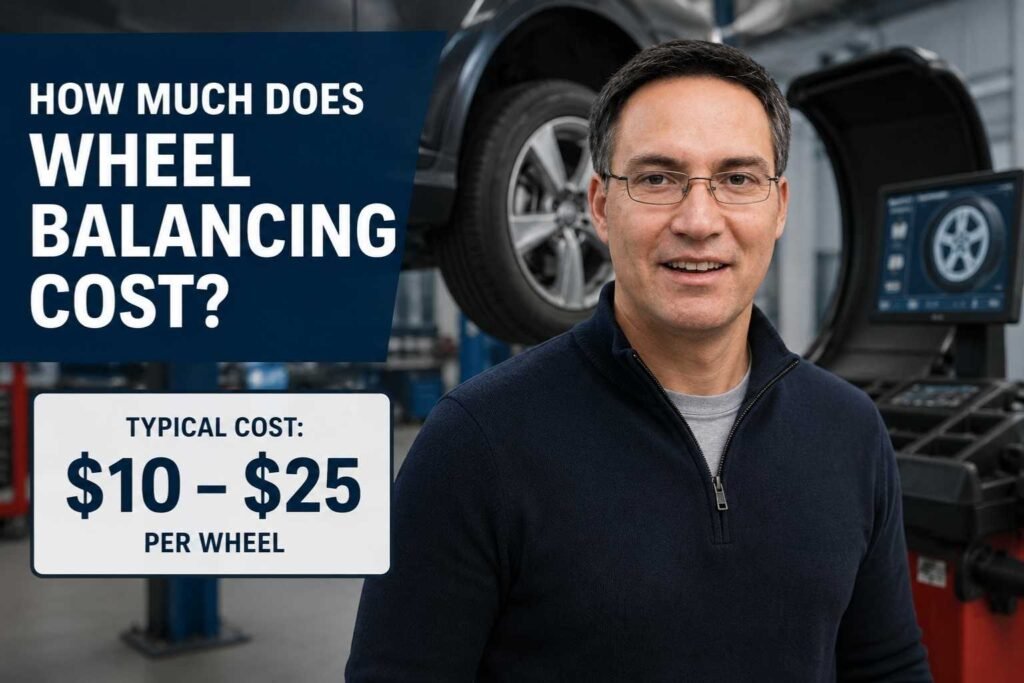
On average, you will pay between $40 and $80 for a full set of four tires. If you just need one tire fixed, expect to pay $10 to $20. It is a small price to keep your car safe.
- Discount Tire or Big O: Usually around $15 per tire.
- Local Independent Shops: Often $20 per tire, but they give better care.
- Luxury Dealerships: Can be $100 or more for a full set.
I usually go to a local spot I trust. They know me and my truck. Plus, they use the latest gear. If you are looking for a place that treats your car like their own, I highly recommend checking out AutoToolRadar. I actually own the place, and we pride ourselves on being honest with every driver who rolls in.
Why the Price Fluctuates: It’s Not Just a Flat Rate
Understanding the “why” behind the bill helps you stay in control of your budget. Different factors can push that total cost up or down depending on your specific vehicle.
1. The Type of Equipment Used
Standard balancers are common and cheap. They spin the wheel and tell the tech where to put the weight. But there is a better way. It is called Road Force Balancing.
This machine uses a heavy roller to press against the tire. It acts like the road is actually under the car. It found a tiny “hard spot” in my tire that a regular machine missed. It costs about $20 extra, but for me, it was worth every penny.
2. Your Location in the USA
Labor rates are a big deal. If you live in a high-cost area like NYC or San Francisco, you will pay more. I noticed that shops in rural areas might charge $10 less per set.
3. Wheel Size and Material
Do you have those giant 22-inch rims on your SUV? Or maybe custom alloy wheels on your Tesla? These take more time. Techs have to be careful not to scratch the finish. They also use special “stick-on” weights instead of the clip-on ones.
- Steel Wheels: Cheap and easy to balance.
- Alloy Rims: Require more care and hidden weights.
- Over-sized Tires: Often incur a “heavy lifting” fee at some shops.
Signs Your Wheels Are Screaming for Help
I didn’t notice my vibration until I hit highway speeds. That is very common. The physics of an unbalanced wheel really show up when the tire is spinning fast.
Last summer, I ignored a slight shimmy for a month. Bad move. When I finally went in, my front tires had “cupping” wear. It looked like someone took a spoon and scooped out bits of the tread. I had to buy new tires way sooner than I planned.
- Steering Wheel Shake: This usually means the front tires are the problem.
- Seat or Floor Vibration: This often points to the rear tires.
- Poor Gas Mileage: If your tires aren’t smooth, your engine works harder.
- Strange Noise: You might hear a rhythmic “wob-wob-wob” sound.
I felt it mostly in my seat this time. It felt like I was sitting on a giant massage chair that I couldn’t turn off. Not exactly the luxury experience I wanted for my morning commute!
Balancing vs. Alignment: A Common Mix-up
Many people think these are the same thing. They aren’t. I’ve seen shops try to upsell a “four-wheel alignment” when the customer just needed a balance.
Wheel Balancing is about the weight of the tire. It makes sure the tire is equally heavy all the way around. If it isn’t, it hops and wobbles as it spins.
Wheel Alignment is about the angle of the tires. It ensures they point straight. If your car pulls to the left or right when you let go of the wheel, that is an alignment issue.
I always tell my friends: if it shakes, balance it. If it pulls, align it. Knowing the difference can save you a hundred dollars in unnecessary labor.
How Often Should You Do This?
I follow a simple rule. I get my wheels balanced every time I rotate my tires. For most of us in the U.S., that is every 5,000 to 8,000 miles.
Think about how much we drive. We hit potholes in the winter. We curb our wheels while parallel parking. These little hits can knock off a small wheel weight. Even a half-ounce weight falling off can cause a massive vibration.
- New Tires: Must be balanced at the time of install.
- After a Repair: If you get a flat fixed, get it balanced.
- Once a Year: Even if you don’t feel a shake, it’s good insurance.
At AutoToolRadar, we check the balance for free if you are getting other work done. It’s just part of being a good neighbor in the car community.
The Invisible Weights: Understanding What You Are Paying For
When you pay for a balance, you aren’t just paying for the lead weights. You are paying for the expertise and the high-tech machinery that makes your ride smooth.
It was a Tuesday afternoon in Philly when I watched a tech use a Road Force Elite machine. This thing is the Ferrari of tire balancers. It costs over $30,000! Most shops just use a standard spin balancer. The standard one is fine for a Honda Civic, but for my F-150 with beefy tires, the Road Force was a game-changer.
- Standard Spin Balance: This takes about 5 minutes per tire. The machine spins the wheel to find heavy spots.
- Road Force Balance: This takes 10-15 minutes. It uses a roller to simulate the weight of the car. It’s like a “stress test” for your tires.
- Weights: You’ll see clip-on weights on steel wheels or adhesive “stick-on” weights inside alloy rims. Stick-on weights are cleaner but sometimes cost a tiny bit more for the labor.
I’ve noticed that some shops in the Midwest are a bit cheaper than the ones on the East Coast. If you’re in a big city, expect the labor to be about 20% higher. At AutoToolRadar, we keep our rates flat because we know how much a vibration-free drive matters to our customers.
Big Box Stores vs. Local Specialists
Deciding where to take your car can be a headache. I’ve tried them all, from the massive warehouses to the tiny “hole-in-the-wall” garages.
Last year, I took my daily driver to Costco. They are great because the balancing is included for the life of the tire if you buy from them. Discount Tire does something similar. It’s a huge perk for US drivers who put a lot of miles on their cars.
- Costco/Walmart: Very cheap, but you might wait two hours while they finish other cars.
- Discount Tire: Fast and efficient, plus they have “Lifetime” packages that are a steal.
- Local Mechanics: They might charge $80 for the set, but they actually listen when you describe that weird “hum” at 70 mph.
I usually prefer the local route. Why? Because I like talking to the person actually touching my car. At AutoToolRadar, we don’t just spin the wheel and slap a weight on. We look at the suspension too. If your shocks are leaking, no amount of balancing will fix that shake!
Hidden Costs Nobody Tells You About
The price on the sign is rarely the price you pay at the register. I learned this the hard way after a trip to a dealership in Jersey.
They told me it was $50 for the balance. Then I saw the “Shop Supplies” fee. Then a “Waste Disposal” fee. Suddenly, my $50 job was $75. It’s frustrating. In the US, these little fees add up fast.
- Valve Stem Replacement: Sometimes they suggest new ones. It’s usually $5 per tire.
- TPMS Reset: If your tire pressure light is on, some shops charge to “relearn” the sensors.
- Stuck Lug Nuts: If your car has seen a few salted winters, rusty bolts can add labor time.
I make it a point at AutoToolRadar to give you an “out-the-door” price. No surprises. No “extra” fees for the weights themselves. I think that’s why our regulars keep coming back—they know the price we say is the price they pay.
Mobile Tire Services: The New Kid on the Block
Have you seen those vans driving around with tire machines inside? I tried one for my wife’s car last month. It was the ultimate “lazy” (and efficient) move.
The tech showed up at our house while I was making lunch. He balanced all four wheels right in our driveway. It cost about $120, which is more than a shop. But I didn’t have to drive anywhere or sit in a greasy waiting room for an hour.
- Pros: Incredible convenience. No driving on a shaky wheel to get it fixed.
- Cons: You pay a premium for the “service call.” It’s about $40 extra.
- Best for: Busy parents or people working from home.
It was cool to watch, honestly. These vans are packed with high-tech gear. Even as a tech blogger, I was impressed by how they fit a full-sized balancer in a Mercedes Sprinter van. If you value your time more than $40, it’s a solid choice.
DIY Balancing: Can You Do It Yourself?
A friend of mine asked if he could just buy a “bubble balancer” from Harbor Freight and do it in his garage. I told him he could, but I wouldn’t recommend it.
Static balancing (the bubble kind) only fixes the “up and down” shake. It doesn’t touch the “side to side” wobble (dynamic balance). Modern US cars are built with such tight tolerances that a bubble balance just isn’t enough anymore.
- Bubble Balancers: About $50 to buy. Good for trailers or old farm trucks.
- Spin Balancers: Thousands of dollars. Necessary for any car going over 40 mph.
- The Verdict: This is one of the few things I don’t DIY. Take it to the pros.
Even at AutoToolRadar, we use computer-calibrated machines. The accuracy is down to a fraction of an ounce. Your hands (and your tires) will thank you for letting a machine do the heavy lifting.
The Cost of Waiting: Why Skipping a Balance is a Budget Killer
I remember talking to a guy at a gas station in Georgia once. He was driving a nice Jeep Grand Cherokee, but his front tires looked like they had been through a war. One side of the tread was almost gone. I asked him if he felt a shake, and he said, “Yeah, for about six months.”
Ignoring a vibration doesn’t just make your hands numb. It destroys your suspension. When your wheel is out of balance, it’s literally slamming into the road hundreds of times a minute. That energy has to go somewhere. It goes into your shocks, your struts, and your ball joints.
- Tire Life: An unbalanced tire can wear out 30% faster. That turns a 60,000-mile tire into a 40,000-mile tire.
- Suspension Repairs: Replacing a set of struts in the U.S. can cost $600 to $1,200.
- Fuel Efficiency: A shaky car is an inefficient car. You might lose 1-2 miles per gallon. Over a year of commuting, that’s a couple of hundred dollars at the pump.
When I look at it that way, paying $60 for a balance isn’t a cost—it’s an investment. It’s like buying insurance for your tires. At AutoToolRadar, we always show our customers the “cupping” on their tires before we fix them. Once you see the damage with your own eyes, you never skip a balance again.
Technical Talk: What is a “Static” vs. “Dynamic” Balance?
As a tech blogger, I love the nitty-gritty details. You don’t need to be an engineer to understand this, but knowing it will make you sound like a pro at the shop.
A Static Balance is the old-school way. Imagine a see-saw. You find the heavy spot and put a weight on the opposite side. This stops the wheel from hopping up and down. It’s fine for slow-moving equipment, but it’s not enough for a modern SUV on a highway.
A Dynamic Balance is what most shops do now. This uses a computer to find heavy spots on the inside and outside edges of the rim. This stops the wheel from wobbling side-to-side. Most high-end machines today do both at the same time.
- Static: One plane of weight. Best for very narrow wheels.
- Dynamic: Two planes of weight. The standard for almost all US passenger cars.
- Counter-Act Beads: Sometimes, for huge off-road tires, we use ceramic beads inside the tire. They move around automatically to balance the wheel as you drive.
I’ve used beads on my own truck when I had oversized mud tires. They worked okay, but for a smooth highway ride, nothing beats a proper computer balance. At AutoToolRadar, we use the latest software to ensure that “dynamic” wobble is totally gone.
How to Talk to Your Mechanic Like an Expert
I hate seeing people walk into a garage and feel intimidated. I’ve seen it happen at big dealerships in Chicago and small shops in Florida. If you use the right words, the tech knows they can’t pull a fast one on you.
Next time you go in, don’t just say, “My car shakes.” Be specific. Tell them at what speed it happens. Tell them if you feel it in the steering wheel or the seat. This helps them find the problem faster, which can sometimes save you money on “diagnostic” labor.
- “Check the runout”: Ask if the wheel itself is bent. A balancer can’t fix a bent rim.
- “Match Mounting”: This is where they align the heaviest part of the tire with the lightest part of the rim. It uses less lead weight.
- “Check for Flat Spots”: If your car sat for a long time during a cold Michigan winter, the tires might be flat-spotted. No balance will fix that—you just have to drive it out.
I always encourage my customers to come into the shop area (safely!) and watch the machine. It’s fascinating to see a computer pinpoint exactly where a half-ounce weight needs to go. We pride ourselves on that transparency at AutoToolRadar.
Seasonal Changes: The Winter Tire Factor
If you live in the Northeast or the Midwest, you probably swap to winter tires. This is the best time to check your balance.
When tires sit in your garage for six months, the rubber can settle. Plus, if you didn’t clean them before storing them, old mud or brake dust can act as “accidental” weight. I always re-balance my winter set before they go back on my truck in November.
- Snow Build-up: If your car shakes after a snowstorm, it might not be the balance. It’s likely just snow packed inside your rims.
- Cold Air: Cold air makes tires stiffer. You might feel vibrations more in the winter than in the summer.
- Storage Matters: Store your tires on their side or on a rack to prevent them from deforming.
I once spent forty minutes trying to “balance” a wheel that just had a chunk of frozen New Hampshire slush stuck to it. Lesson learned: always wash your wheels before you pay for a balance!
Final Thoughts: Keep It Smooth
Maintaining a car in the U.S. shouldn’t feel like a mystery. Whether you are driving a brand-new electric car or a trusty old sedan, the physics are the same. A balanced wheel is a happy wheel.
When someone asks me, “How much does wheel balancing cost?” I tell them it’s the cheapest “fix” for a bad-driving car. For under $100, you get your comfort back, you save your tires, and you keep your family safe on the road.
If you are ever in my neck of the woods, stop by AutoToolRadar. I’d love to show you the shop and make sure your ride is as smooth as it was the day it left the showroom. Until then, keep an eye on those vibrations and don’t let a tiny weight ruin your drive!
The Hidden Math of Tire Maintenance: Saving Your Suspension
One thing I’ve learned from running AutoToolRadar is that most people think balancing is just about comfort. It’s not. It’s about protecting the expensive metal bits under your car.
When your tire is out of balance, it exerts a “radial force” every time it spins. In simple terms, your tire is trying to jump off the ground. If you’re driving at 70 mph on the Florida Turnpike, that tire is hitting the pavement thousands of times per minute. Your shocks and struts have to absorb that extra energy, which wears them out twice as fast.
- Replacing Struts: In 2026, a set of quality struts for a domestic SUV like a Ford Explorer can easily run you $800 to $1,400 with labor.
- Replacing a Tire: A single high-end Michelin or Continental tire is now $200 to $350.
- The Balancing Cost: Spending $60 now prevents you from spending $1,500 later.
I always tell my customers to think of balancing as a “health checkup” for their suspension. If we find that a tire is taking an unusual amount of weight to balance, it’s a red flag. It might mean the tire is separating internally, or your rim is slightly bent from a pothole. Catching that early can literally save your life on the highway.
Road Force Balancing: The Tech Enthusiast’s Choice
As someone who loves gadgets, I’m obsessed with the Hunter Road Force Elite. This isn’t your grandfather’s spin balancer. This machine is a masterpiece of modern engineering that every US driver should know about.
Most standard balancers just spin the wheel in the air. That’s “static” or “dynamic” balancing. But the Road Force machine uses a heavy roller to press against the tire with up to 1,250 pounds of force. It simulates the actual weight of your vehicle on the road.
- What it finds: It detects “hard spots” in the tire and “runout” in the rim.
- The Price Difference: A standard balance is usually $10-$15 per tire, while Road Force is $20-$40 per tire.
- Is it worth it? If you drive a performance car like a Mustang or a Tesla, or a heavy truck with 20-inch rims, yes.
I remember a client who came into AutoToolRadar after three other shops couldn’t fix his steering shake. We put his wheels on the Road Force Elite and found that his tire was “out of round” from the factory. The machine told us exactly how to rotate the tire on the rim to cancel out the vibration. He drove away with a ride as smooth as glass.
Why US Drivers Pay More (And How to Pay Less)
The automotive service market in the USA is unique. We drive more miles and carry more weight than almost any other country. Because of this, our shops invest in much heavier-duty equipment, which reflects in the price of a balance.
Labor rates in states like California or New Jersey can be $150 per hour, while in the South, they might be $90 per hour. This is why that “simple” $40 balance can quickly become $80 depending on where you are parked.
- The “Bundle” Trick: Don’t just ask for a balance. Ask for a “Tire Health Package.” Most shops will give you a rotation, balance, and brake inspection for a flat fee of $79 to $99.
- The Lifetime Advantage: If you go to a place like Discount Tire or Pep Boys, always buy the lifetime balancing certificate. It usually costs about the same as two separate balancing appointments. Since you should balance your tires every 6,000 miles, it pays for itself in less than a year.
- The DIY Myth: Don’t try those “balancing beads” or DIY kits from Amazon for your daily driver. They are meant for semi-trucks or off-road rigs. For a highway-speed vehicle, they often make the vibration worse.
At AutoToolRadar, we believe in fair pricing. We know that the cost of living is up, so we offer a digital report with every balance. We show you exactly how much weight each tire needed. Transparency is how we build trust, and it’s how you know you aren’t just paying for a “spin and a prayer.”
Final Checklist: Before You Leave the Shop
I’ve seen too many people pay for a balance and drive away only to find the shake is still there. Don’t be that person. Here is what I do every time I get my truck serviced.
First, check your wheels for “old” weights. A lazy tech might just add more weights instead of taking the old ones off. This is called “counter-balancing,” and it’s a huge no-no. Your wheel should have the minimum amount of weight possible to be balanced.
- Ask for a Printout: Modern machines like the ones we use at AutoToolRadar can print a “before and after” report.
- Check the Lug Nuts: Make sure they used a torque wrench, not just an “impact gun.” Over-tightened bolts can warp your brake rotors!
- Test Drive Immediately: Take the car straight to the nearest highway. If it shakes at 65 mph, turn around and go back. Don’t wait until next week.
Maintaining your car is a partnership between you and your mechanic. By knowing how much wheel balancing costs and understanding the technology behind it, you are the one in the driver’s seat—literally and figuratively. Keep your tires balanced, your suspension happy, and your wallet full!

I’m William James, the founder and owner of Auto Tool Radar. My journey didn’t start in a boardroom; it started in my father’s garage in Bellingham, Washington, where I spent my childhood figuring out not just how to fix engines, but why they failed in the first place.
With a Master’s in Automotive Engineering and years of experience as a diagnostic engineer, I saw firsthand how much the industry struggled with outdated tools and guesswork. I founded Auto Tool Radar in 2015 to change that. My philosophy is simple: technology should empower technicians, not complicate their lives. Whether we’re handling precision brake repairs or implementing AI-driven diagnostics, my goal is to provide the reliability and data-driven insights that modern drivers and professionals deserve.